
When AI can generate boilerplate code with a single click, automatically troubleshoot bugs, rapidly develop APIs, and even independently build simple business modules, many software developers find themselves grappling with the same anxiety: Will the code I bury myself in every day eventually be replaced by AI? Will the coding skills I’ve spent years honing still give me a competitive edge in my career?
Honestly, this panic is incredibly real. After all, we witness the rapid iteration of AI in the programming world every single day. Highly repetitive CRUD operations, basic script writing, and simple logic implementations are indeed being swiftly taken over by AI. But I want to be straight with you: AI is not out to replace programmers; it will only replace those who code mechanically and refuse to step out of their comfort zones.
This article won’t spout empty theories or offer fluffy career “chicken soup.” Instead, grounded in workplace realities, it provides honest, pragmatic, and actionable transition strategies to help you find your niche, steadily enhance your core competencies, and avoid being swept away by the AI wave.
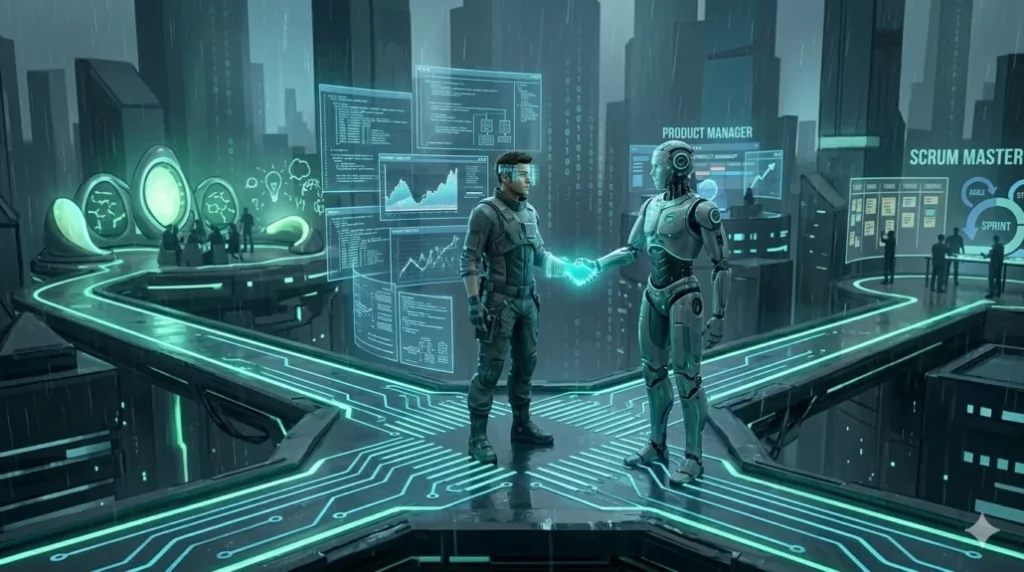
First, Recognize the Core Reality: AI is a Tool, Not a Rival—Don’t Compete with It on Coding
Many view AI as a job-stealing enemy, which fundamentally misunderstands its role. Looking back at the history of technological evolution—from writing code in Notepad to intelligent IDEs, from physical servers to cloud platforms—every tool revolution has eliminated inefficient labor, not the technologists themselves. At its core, AI is the programmer’s ultimate efficiency amplifier.
In the past, developers spent most of their time on repetitive coding, digging through documentation, fixing trivial bugs, and piecing together code snippets. These low-creativity, standardized tasks are precisely what AI excels at. In the future, such work will be entirely handed over to AI. The core value of a programmer will shift completely from “writing code by hand” to “defining problems with the mind, orchestrating AI, delivering value, and maintaining a holistic view.”
You don’t need to type code faster or write more than AI. However, you must understand the following far better than AI ever could: what real pain points the business needs to solve, the architectural logic and risks behind the code, how to turn fragmented features into a usable product, and how to lead a team to translate technology into business outcomes. Simply put, the programmer of the future is an AI user, manager, and decision-maker—not a coding laborer competing with AI for speed. Once you figure this out, navigating your career pivot will no longer be clouded by blind anxiety.
Transition Strategy 1: Innovation Coach—Bridge the Gap Between Tech and Business to Actualize AI Value
If you have a proactive personality, love exploring new technologies, enjoy leading teams and solving problems for others, but don’t want to completely abandon tech for pure management, becoming an Innovation Coach is a highly suitable path. It is also a role with a massive talent shortage in the AI Era.
Currently, many traditional teams and industries hold resources and face real business pain points, yet they have no idea what AI can do or how to implement it without falling into traps. They either blindly follow trends to launch AI projects or rigidly stick to old tech, terrified of innovation. As a result, projects either end up abandoned or drain resources. An Innovation Coach with a developer background is perfectly positioned to fill this gap.
Core Responsibilities:
- Dig deep into genuine business pain points, filtering out scenarios where AI can truly be implemented and yield results, while rejecting pseudo-demands and gimmicky innovations;
- Use design thinking and agile methodologies to lead the team in rapid prototyping and iterative trial-and-error, validating the feasibility of innovative solutions;
- Train the team to proficiently use AI development tools, transforming ideas into demonstrable, actionable product prototypes;
- Break down communication barriers between technology, product, and business sides, translating technical jargon into value propositions the business understands, ensuring innovation remains grounded and relevant.
Actionable Path (Even with Zero Experience):
You don’t need to resign or switch departments immediately. Start with small internal company projects and actively take the lead on tech innovation pilots. In your spare time, study design thinking, user research, and rapid prototyping. Practice your communication skills to frame technical proposals as business value propositions. Gradually transform from an “executor who writes code” into a “leader who guides everyone to solve problems using technology.”
Transition Strategy 2: Technical Product Manager (TPM)—Be the Requirements Decision-Maker Who Understands Tech Best
Many developers think product managers merely “raise and change requirements,” which is a massive misconception. In the AI Era, a PM who understands technology is a rare commodity in the job market, holding a far greater advantage than those with purely technical or purely product backgrounds.
Ordinary PMs easily fall into traps: they don’t grasp technical boundaries and propose unrealistic requirements; they lack an understanding of development costs and arbitrarily set project timelines; they don’t comprehend the logic behind AI implementation and blindly plan AI features. A programmer-turned-PM can precisely avoid these pitfalls. By understanding both business needs and technical feasibility, they become the most solid bridge between business and tech.
Who it’s for:
Programmers who no longer want to bury their heads in code, but are willing to engage with users and dive deep into the business. Individuals with clear logic who excel at weighing pros and cons, and who care more about “building a useful product” than “writing perfect code.”
Pragmatic Transition Steps (Step-by-step, no rushing):
- Actively participate in requirement reviews and grooming within your current projects. Understand the business goal behind every requirement, rather than just thinking about how to implement it;
- Learn basic product knowledge in your spare time: requirement analysis, PRD (Product Requirements Document) writing, wireframing, and UX design. You don’t need to be an expert; just learn enough to apply it;
- Start with small feature modules. Take the initiative to follow up on requirements, execution, and post-mortems to accumulate practical product experience;
- Gradually transition from “implementing someone else’s requirements” to the product decision-maker who “defines what should and shouldn’t be built.”
The biggest advantage of this direction is that you will never be easily fooled by either pure product or pure technical staff. In a workplace environment characterized by rapid AI iteration, this level of discernment is incredibly valuable.
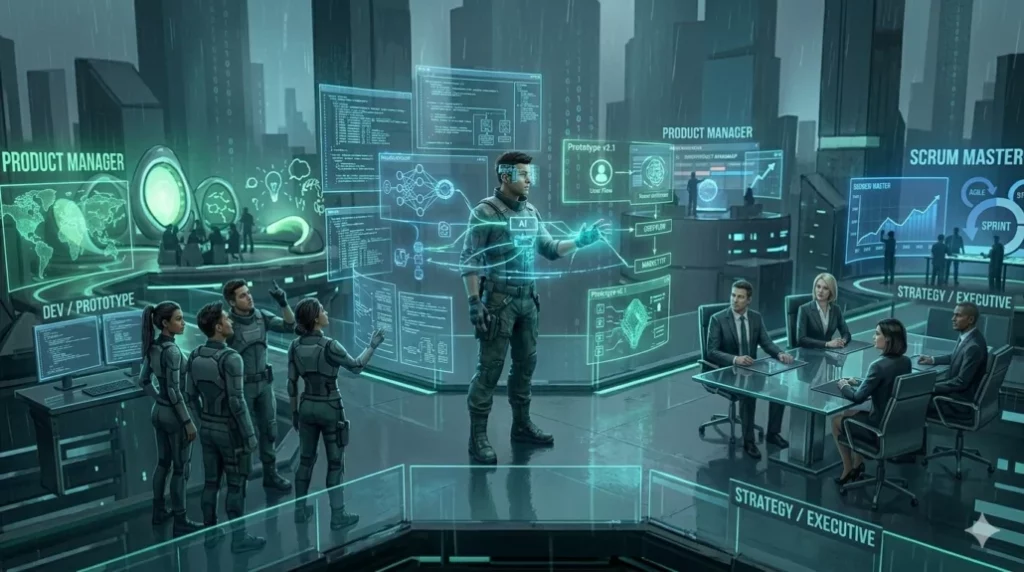
Transition Strategy 3: Scrum Master + Technical Leadership—Be the Core Figure Who Leads the Team and Delivers Results
If you are a seasoned programmer with years of experience, possess a solid background in teamwork, or have even led small teams—and if you enjoy coordinating tasks, driving processes, and facilitating complex collaborations—transitioning toward Scrum Master, Agile Coach, or Technical Team Management is the most stable path and the least likely to be replaced by AI.
No matter how powerful AI becomes, it can only process code and logic; it can never manage people. Resolving team conflicts, building efficient R&D processes, motivating the team, managing project risks, fostering a healthy engineering culture, and handling cross-departmental collaboration—these human-centric soft skills are the core competencies that AI can never replicate.
Core Responsibilities of a Scrum Master/Agile Coach:
- Remove obstacles in the R&D process, helping the team avoid inefficient internal friction and focus on core development;
- Drive agile development processes, ensuring project progress remains transparent, controllable, and delivered on time;
- Guide the team toward self-management and continuous optimization, adapting to the new AI+human collaboration paradigm;
- Cultivate the team’s ability to utilize AI tools, enhancing overall R&D efficiency.
Core Responsibilities in Technical Leadership:
- Oversee technology selection and architectural planning, ensuring system stability and scalability;
- Lead the team, mentor junior members, build talent pipelines, and balance innovation with technical risks;
- Align with business goals, ensuring technology truly serves the business rather than blindly pursuing technological showmanship.
Actionable Path:
Proactively take on team coordination, process driving, and mentoring tasks without waiting for a manager’s assignment. In your spare time, learn about Scrum, Agile development, team facilitation, and basic management. Practice communication, conflict resolution, and public speaking. Slowly upgrade yourself from being “responsible for a piece of code” to being “responsible for a team and the outcome of a project.”
Other Pragmatic Choices: Staying Grounded by Deepening Technical Expertise (No Role Change Needed)
Not everyone wants to pivot to product, management, or coaching. Many programmers simply love diving deep into technology and want no part of “soft” tasks like communication and coordination. That is completely fine. There’s no need to force a role change. Deepening your technical expertise can equally boost your competitiveness. Here are a few pragmatic paths:
1. Architect / Senior Technical Expert
AI can write foundational code, but it cannot handle core tasks like overall architectural design, high-availability optimization, performance tuning, security risk control, or microservices architecture implementation. Dive deep into architecture. Become the person in the team who sets the technical direction, controls code quality, and tackles core technical challenges. By fully detaching from repetitive coding and establishing yourself through technical decision-making, you will never be obsolete.
2. AI Engineering Implementation / Prompt Engineer
You don’t need to delve into the underlying algorithms of Large Language Models—that’s the job of algorithm scientists. For the average programmer, successfully implementing AI applications is enough. Master various AI development tools, design high-quality prompts to ensure AI outputs stable and usable code, and establish internal AI development standards and workflows for the team. Becoming the tech person who best leverages AI for efficiency in your company is the lowest-cost, fastest-yielding upgrade path.
3. Vertical Industry Deep-Dive Technologist
Technology can be replaced by AI, but industry experience, business rules, compliance requirements, and the hard lessons learned from past mistakes never can. Put down roots in vertical industries like finance, healthcare, manufacturing, or cross-border e-commerce to become “the technologist who understands this industry best.” A hybrid professional who can handle technical execution while mastering industry business logic is in massive demand and enjoys far greater job stability than a generalist programmer.
A Note to All Programmers: A Pivot is Not Abandoning the Past, But Upgrading Yourself
I truly understand your anxiety: you’ve studied programming diligently for years, building your livelihood on coding skills, only to suddenly realize that this skill is no longer an impregnable moat. Anyone would feel lost and panicked. But you must understand this: the computational thinking, logical analysis skills, and patience for solving complex problems you’ve accumulated over the years are top-tier foundational abilities. A career pivot is never starting from scratch; it is simply layering soft skills on top of this strong foundation.
What will truly eliminate you is never AI, but rather your peers who learn to use AI and complete their skill upgrades first. Don’t blindly jump ship to follow trends, and don’t force yourself to do things you despise. Combine your personality, strengths, and existing experience to choose a path that suits you, and simply walk it steadily.
The AI Era is by no means the end of the road for programmers; it is a new starting line for exceptional developers. Let go of your anxiety, ground yourself in upgrading your skills, and you will remain an irreplaceable force in the tech industry.