
Core Principles of an AI-Driven Organization
1. Data-Driven Autonomy
2. Rapid Learning Cycles
3. Cross-Functional Collaboration
4. Continuous Innovation
AI-Optimized Team Structures
1. AI Squads (Cross-Functional AI Teams)
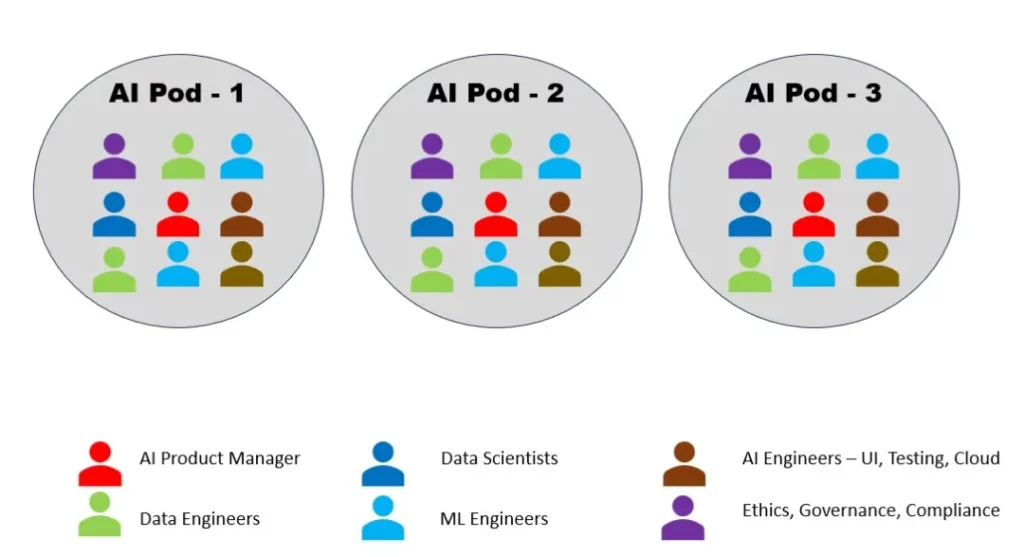
AI Squads are akin to small agile teams, but are specifically optimized for AI workflows.
Members include:
1) Machine Learning Engineers
2) Data Scientists
3) Data Engineers
4) AI Product Managers
5) Domain/Business Experts
6) UX/UI Designers (As needed)
7) MLOps Experts
Responsibilities:
1) Overseeing the end-to-end AI development lifecycle, from ideation, data exploration, and model prototyping to deployment, launch, and operational monitoring.
2) Conducting rapid, iterative experiments, such as A/B testing, quick pilots, and MVP deployments.
3) Continuously optimizing AI models and solutions based on real-time user and data feedback.
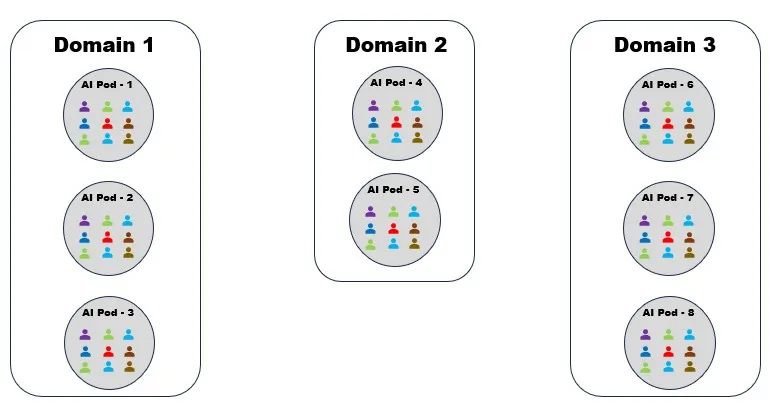
2. AI Domains (Strategic Business Tribes)
Examples:
1) Customer Engagement & Personalization
2) Supply Chain & Logistics Optimization
3) Predictive Analytics & Decision Support
4) AI-Driven Product Innovation & R&D
Responsibilities:
1) Ensuring the work of all AI Squads aligns with the organizational vision and business outcomes.
2) Providing shared resources and strategic guidance to maximize the business value of AI initiatives.
3) Facilitating collaboration among different AI Squads within the domain to achieve optimal resource utilization and strategic alignment.
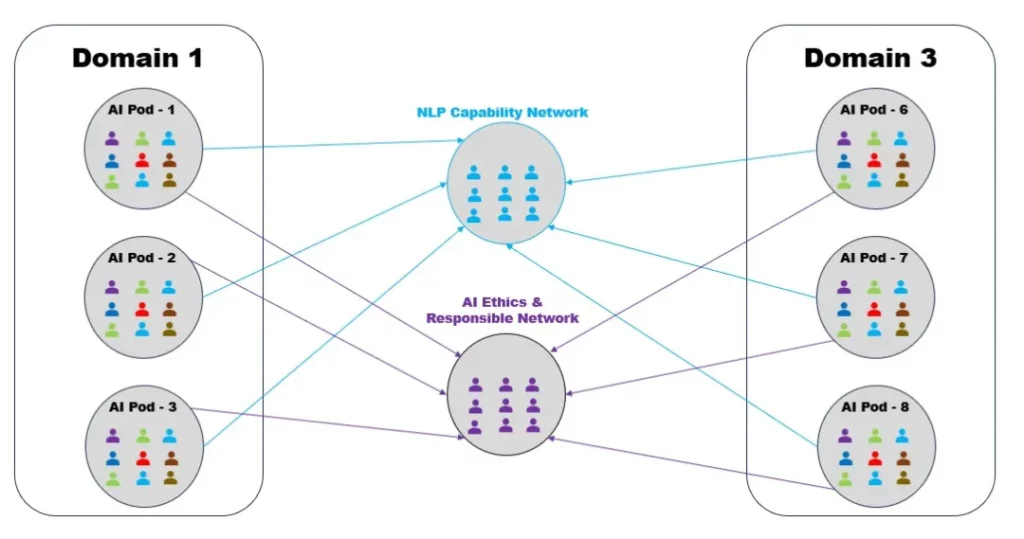
3. AI Capability Networks (Professional Guilds)
Examples:
1) Natural Language Processing (NLP) Capability Network
2) Computer Vision & Image Processing Network
3) MLOps & AI Infrastructure Network
4) AI Ethics & Responsible AI Network
Responsibilities:
1) Providing professional support, training, and continuous upskilling to ensure the sustained growth of the organization’s AI capabilities.
2) Maintaining AI best practices, technical standards, and operational norms to ensure consistency across squads and domains.
3) Actively driving cross-team knowledge sharing to ensure technological breakthroughs are rapidly disseminated and applied.
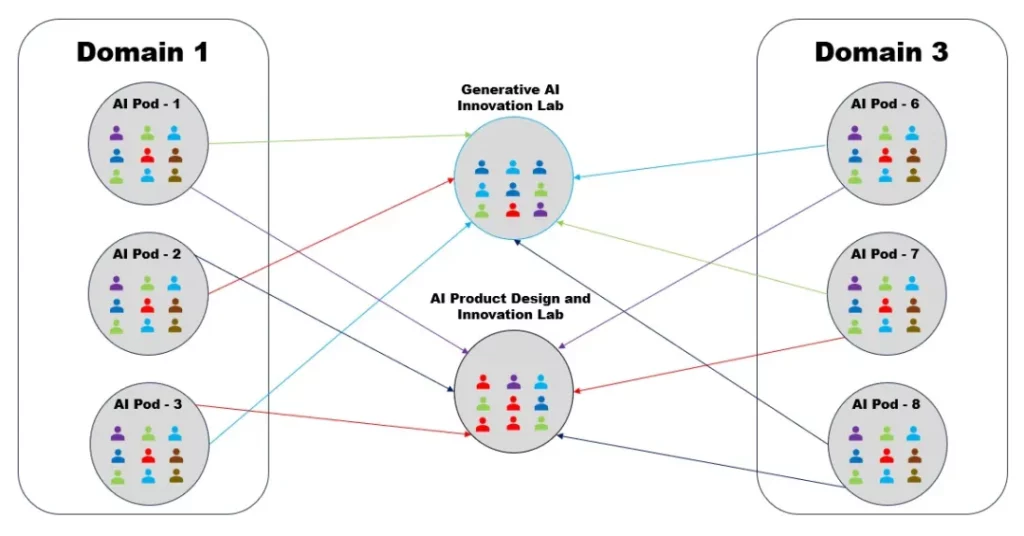
4. AI Innovation Labs (Knowledge Communities)
5. AI Governance and Leadership System
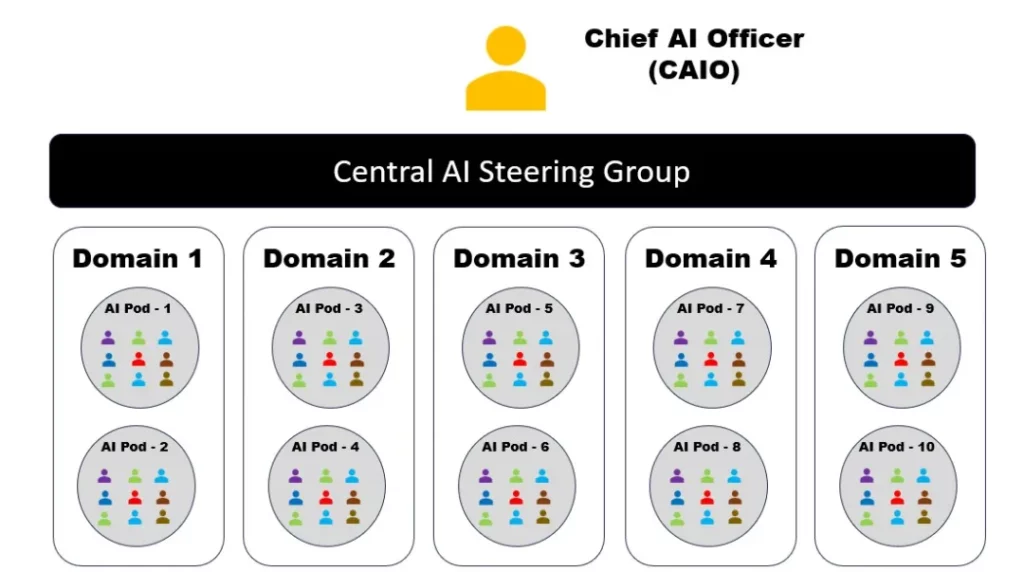
AI Strategy Steering Committee
This strategic body is responsible for orchestrating the overall AI vision, strategy, and governance. It ensures alignment across AI Domains and Squads, while enabling rational resource allocation and effective prioritization.
Responsibilities:
1) Formulating AI strategies and priorities based on organizational strategic objectives.
2) Overseeing AI ethics practices and responsible AI governance, including transparency, fairness, and bias mitigation.
3) Providing strategic resource support—including talent, funding, and technological infrastructure—and proactively resolving structural challenges at the organizational level.
The Role of the Chief AI Officer (CAIO)
1) The CAIO is an executive role dedicated to driving the execution of the organization’s AI strategy.
2) Responsible for enforcing the AI strategic direction, removing organizational roadblocks, and aligning all stakeholders.
3) Championing an agile, iterative approach to AI innovation.
4) Serving as a crucial bridge between the C-suite management team and the AI organization.
Why This AI Organizational Model Works
1. Rapid Adaptation to Change
2. Continuous Experimentation and Innovation
3. Professional Capability Building and Knowledge Sharing
AI Capability Networks ensure that best practices and professional skills are continuously developed and widely disseminated throughout the organization.
4. Strategic Alignment Without Losing Flexibility
About the Author